
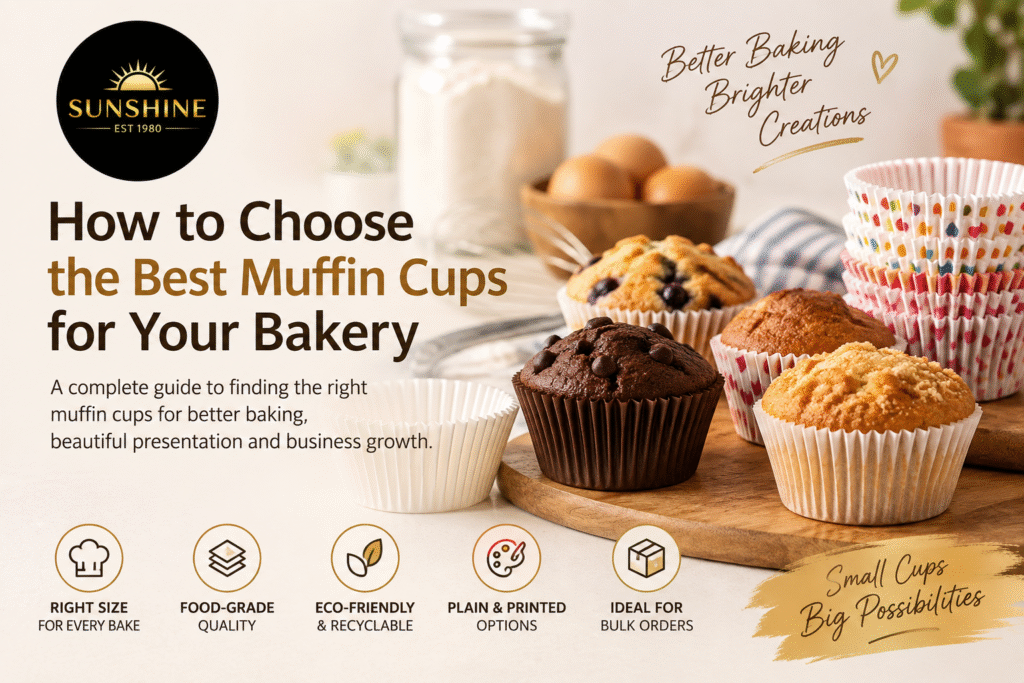
How to Choose the Best Muffin Cups for Your Bakery
Running a bakery is about much more than creating delicious recipes. From selecting quality ingredients to choosing the right packaging, every small decision can affect the final product. One of the simplest yet most important items in a bakery is the muffin cup.
Whether you make muffins, cupcakes, small cakes, cookies, or certain Indian sweets, the right muffin cup can make baking easier and presentation more attractive. But with different sizes, styles, materials, and designs available, how do you choose the best muffin cups for your bakery?
The answer depends on your products, production volume, presentation requirements, and the type of customers you serve.
Why Muffin Cups Matter in a Bakery
Muffin cups, also commonly called cupcake liners, are used to hold individual baked products during baking and serving. They can help reduce the need for greasing baking trays while also making finished products easier to handle.
For commercial bakeries, consistency is particularly important. Using the right muffin cup size and quality can help create a uniform appearance across batches.
A good muffin cup should fit your baking requirements while offering convenient handling and an appealing presentation.
1. Choose the Right Muffin Cup Size
One of the first things to consider is size.
Different bakery products require different cup sizes. A small cupcake, standard muffin, and larger baked product will not necessarily work well with the same liner.
Sunshine Industrial Corporation offers muffin cups in sizes ranging from 5 to 11, giving bakeries flexibility when selecting cups for different products.
Before placing a bulk order, consider:
- The size of your baking tray
- The quantity of batter used per product
- The finished product size you want
- The amount of space available between individual cups
- Whether the cups need to be used for baking or serving
Choosing the correct size can help your products maintain a consistent shape and professional appearance.
2. Consider the Paper Quality
The material used to manufacture muffin cups is another important factor.
For food businesses, the paper should be suitable for food contact and appropriate for the intended baking application. Good-quality paper can provide the structure needed to hold the batter during baking and make the finished product easier to handle.
Sunshine Industrial Corporation uses 32 GSM Food Grade PUDUMJEE Packing Tissue Papers for its muffin cups.
When comparing suppliers, ask about the type and quality of paper used rather than choosing purely based on price.
3. Think About Your Bakery’s Product Range
Not every bakery sells the same products.
A neighbourhood bakery may focus on everyday muffins and cupcakes, while a larger commercial bakery may produce several varieties of baked goods for different customers.
Your muffin cup selection should match your product range.
For example, plain cups may be suitable for everyday production where the focus is on the baked product itself. Printed cups can be useful when presentation is an important part of the product.
If your bakery produces multiple types of products, having different sizes and styles available can give you greater flexibility.
4. Plain or Printed Muffin Cups?
This is one of the most common decisions bakery owners need to make.
Plain Muffin Cups
Plain muffin cups offer a simple and clean appearance. They are suitable for bakeries that want the product itself to remain the main focus.
They can work particularly well for:
- Everyday muffins
- Cupcakes
- Commercial bakery production
- Catering orders
- Large-volume baking
Printed Muffin Cups
Printed muffin cups add colour and visual appeal to baked products. They can be especially useful when presentation matters, such as birthdays, celebrations, events, bakeries, cafés, and gift orders.
A visually attractive liner can make an ordinary cupcake look more appealing without requiring complicated packaging.
The choice between plain and printed cups ultimately depends on your product, customer expectations, and branding style.
5. Look for Food-Grade Options
Food safety should always be a priority for bakeries.
Muffin cups come into direct contact with food, so bakery owners should choose products made from suitable food-grade materials.
When evaluating a supplier, ask questions such as:
- Is the paper food grade?
- Is the product suitable for its intended application?
- What certifications or quality standards does the supplier follow?
- Is the paper appropriate for baking?
- Does the supplier maintain consistent quality between batches?
A supplier who can clearly explain their material and quality standards is generally a better choice for long-term business relationships.
6. Consider Eco-Friendly and Recyclable Options
Sustainability is becoming increasingly important for businesses and consumers.
Many bakeries are looking for ways to reduce unnecessary packaging waste and make more environmentally responsible choices.
Paper muffin cups can offer a convenient alternative for bakeries looking for recyclable options. Sunshine Industrial Corporation focuses on eco-friendly and recyclable muffin cups as part of its product offering.
If sustainability is important to your bakery, ask suppliers about the paper source, recyclability, and manufacturing practices before making your decision.
7. Check the Supplier’s Production Capacity
Price isn’t the only factor to consider when buying muffin cups in bulk.
A bakery needs a supplier who can consistently provide the required quantity without compromising quality.
Before choosing a supplier, consider:
- Minimum order quantity
- Available sizes
- Plain and printed options
- Production capacity
- Packaging
- Delivery arrangements
- Consistency of quality
- Ability to handle repeat orders
For commercial bakeries, a reliable supplier can be much more valuable than a supplier offering the lowest initial price.
8. Calculate Your Actual Cost
When comparing muffin cups, don’t look only at the price per roll or package.
Think about the cost in relation to your actual production.
For example, consider:
Cost per cup = Total purchase cost ÷ Number of usable cups
This gives you a better idea of the actual cost of using a particular product.
You should also consider whether poor-quality cups could result in damaged products, inconsistent presentation, or unnecessary wastage. A slightly higher purchase price may be worthwhile if the product provides better consistency and reliability.
9. Buy According to Your Production Volume
A home baker ordering a few dozen cups has very different requirements from a commercial bakery producing thousands of products every week.
If you have regular high-volume production, bulk purchasing can make inventory management easier.
Sunshine Industrial Corporation supplies muffin cups in bulk, with its standard product information specifying a minimum order quantity of 500 rolls. Each roll contains 20 cups, with 25 pieces per cup, resulting in 500 pieces per roll.
Before ordering, calculate your average weekly or monthly consumption. This can help you avoid both overstocking and running out of supplies during busy periods.
10. Choose a Supplier You Can Trust
Your muffin cup supplier becomes part of your bakery’s supply chain. Reliability therefore matters.
A supplier with years of experience in the industry may offer valuable consistency when you need repeat orders.
Sunshine Industrial Corporation was established in 1980 and operates from Bykampady Industrial Estate in Mangalore. The company manufactures plain and printed muffin cups and supplies products for the baking and confectionery industry.
For a bakery, building a relationship with a dependable supplier can make procurement simpler and more predictable over time.
Common Mistakes to Avoid When Buying Muffin Cups
Choosing the right product becomes easier when you know what to avoid.
Buying Only Based on Price
The cheapest option isn’t necessarily the most cost-effective. Consider quality, consistency, quantity, and suitability for your products.
Choosing the Wrong Size
An unsuitable size can affect the appearance and presentation of your baked goods. Always check the dimensions and test the cups before placing a large order.
Ignoring Paper Quality
Food-grade paper quality should be an important consideration, particularly for commercial food production.
Ordering Without Testing
If you’re trying a new supplier, consider testing a sample batch first. This allows your baking team to evaluate how the cups perform with your recipes and production process.
Not Planning Inventory
Running out of muffin cups during a busy production period can disrupt your entire baking schedule. Track your consumption and maintain an appropriate stock level.
Why the Right Muffin Cup Makes a Difference
A muffin cup may seem like a small part of your bakery operation, but it plays several roles.
It can help with:
- Easier baking and handling
- Consistent product presentation
- Convenient serving
- Reduced need for greasing
- Better product appearance
- Efficient high-volume production
- More attractive presentation for customers
The ideal choice depends on what you’re baking and how you’re selling it.
Final Thoughts
Choosing the best muffin cups for your bakery isn’t simply about finding the cheapest product. It’s about finding a combination of the right size, suitable paper quality, reliable supply, attractive presentation, and value for your business.
Start by understanding your products and production volume. Then compare different sizes, plain and printed options, material quality, order quantities, and supplier reliability.
For bakeries looking for food-grade, eco-friendly muffin cups in different sizes, Sunshine Industrial Corporation provides plain and printed options designed for baking and serving applications.
If you’re planning a bulk order or want to learn more about available muffin cup sizes and options, contact Sunshine Industrial Corporation to discuss your requirements.