Sunshine Industrial Corp

Muffin Cups

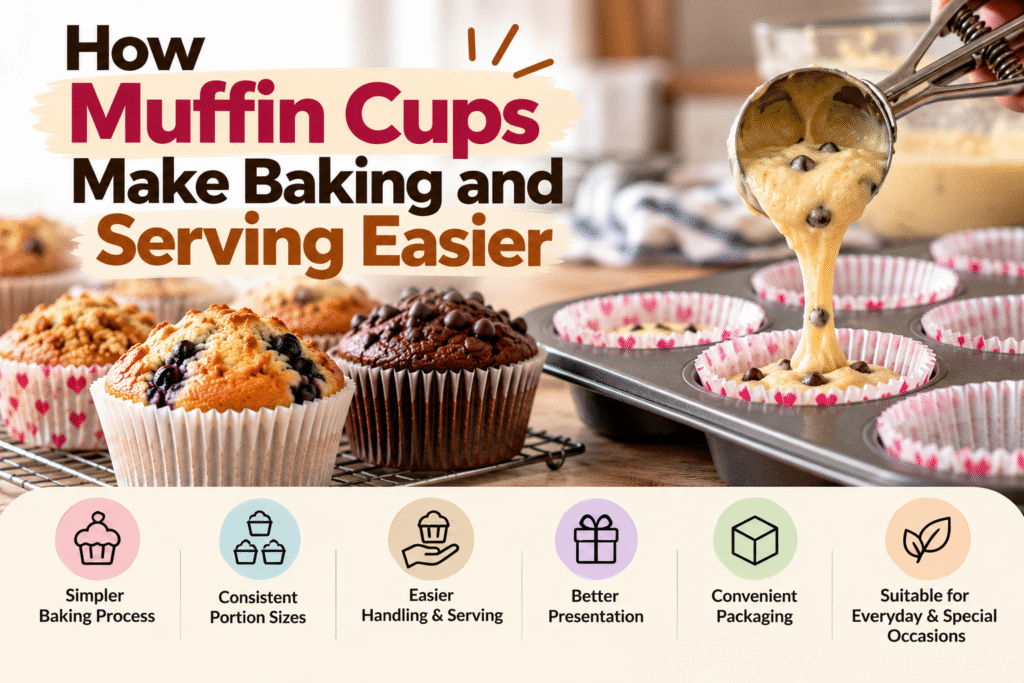
How Muffin Cups Make Baking and Serving Easier
muffin cups

How Muffin Cups Make Baking and Serving Easier Baking is often about getting the little details right. The recipe, ingredients, oven temperature, baking time, and presentation all play a role in the final product. But one simple item that often gets overlooked is the muffin cup. Muffin cups, also known as cupcake liners, are a practical part of baking for both home bakers and commercial bakeries. They help hold individual portions of batter, make baked products easier to handle, and can give muffins and cupcakes a neat, finished appearance. For a bakery producing dozens or even hundreds of products every day, these small conveniences can make a real difference. Whether you run a bakery, café, catering business, or simply enjoy baking at home, understanding how muffin cups make baking and serving easier can help you choose the right product for your needs. What Are Muffin Cups? Muffin cups are paper cups designed to hold individual baked products. They are commonly used for muffins, cupcakes, small cakes, and other suitable bakery products. The cup is placed inside a suitable baking tray before the batter is added. After baking, the paper cup remains around the finished product. This simple process provides several practical benefits. Instead of baking directly against the surface of the tray, the individual product is held inside its own paper cup. The same cup can then become part of the serving experience. Sunshine Industrial Corporation manufactures plain and printed muffin cups in multiple sizes, ranging from 5 to 11. The company has been manufacturing muffin cups since 1980 from its facility in Bykampady Industrial Estate, Mangalore. 1. Muffin Cups Make the Baking Process More Convenient One of the biggest advantages of muffin cups is convenience. Without paper cups, a baker may need to grease individual sections of a muffin tray and carefully remove each baked product after it has cooled. With suitable muffin cups, the process becomes more straightforward. The cups can be placed into the tray, filled with the required amount of batter, and baked. For someone making a small batch at home, this may simply save a little time. For a commercial bakery producing large quantities every day, that convenience can become much more valuable. When a process is repeated hundreds of times, even a small improvement in handling can make daily production easier. 2. They Help Keep Individual Portions Organised Consistency is important in baking. A bakery may want every cupcake or muffin to have a similar size and appearance. Muffin cups provide a simple way to organise individual portions within a baking tray. Once a bakery determines the appropriate cup size and batter quantity for a particular product, the same approach can be repeated across batches. This can help the baking team establish a more consistent workflow. For example, a bakery producing its standard chocolate muffins may decide on one specific cup size and batter quantity. Once that combination has been tested and works well, employees can follow the same process during regular production. 3. They Can Make Serving Easier The usefulness of a muffin cup doesn’t stop when the baking is finished. The paper cup stays with the baked product, giving customers a convenient way to hold it. This is especially useful for products sold individually. Imagine a customer picking up a cupcake from a bakery counter. Holding the paper cup rather than the cake itself can make the product easier to handle while helping maintain its presentation. Muffin cups can therefore be useful for: The same small paper cup can serve both a baking function and a serving function. 4. They Can Reduce Unnecessary Handling Once a muffin or cupcake has been baked, handling it too much can affect its appearance. A muffin cup provides a practical surface around the product, making it easier to move from the baking tray to a cooling area, display tray, packaging box, or serving counter. For commercial bakeries, reducing unnecessary handling can make the workflow more organised. Instead of directly touching each baked product multiple times, staff can handle it using the paper liner where appropriate. This can be particularly useful when preparing large orders where many individual products need to be moved and packed. 5. Muffin Cups Improve Product Presentation Good food should taste good, but presentation matters too. Customers often see a product before they taste it. A neat muffin cup can make an individual muffin or cupcake look more finished and professional. There are two basic styles that can be useful for different bakery requirements. Plain Muffin Cups Plain muffin cups offer a simple and clean appearance. They can work well for: The minimal design allows the baked product itself to remain the focus. Printed Muffin Cups Printed muffin cups can add colour and visual interest. They can be particularly useful for: A printed cup can add an extra visual element without requiring complicated additional decoration. 6. They Can Make Products Easier to Package Muffins and cupcakes are often sold in boxes, trays, or takeaway packaging. Muffin cups provide an individual layer around each product, which can make the products easier to arrange and handle during packaging. For example, a bakery preparing a box of six cupcakes can arrange the individual cupcakes while keeping each one inside its liner. This can create a more organised appearance when the customer opens the box. For bakeries offering takeaway and delivery services, presentation can be particularly important because the customer may first see the product after it has travelled from the bakery to their home. 7. They Offer Different Size Options Not every baked product needs the same size cup. A small cupcake and a larger muffin may require different dimensions depending on the recipe and desired portion. Sunshine Industrial Corporation offers muffin cups in sizes ranging from 5 to 11. Having different size options gives bakeries greater flexibility when working with different products. When selecting a size, consider: It is always sensible to test a new cup size with your actual recipe and baking tray

How Muffin Cups Make Baking and Serving Easier Read More »
What Are Muffin Cups Made Of? A Complete Guide

muffin cups

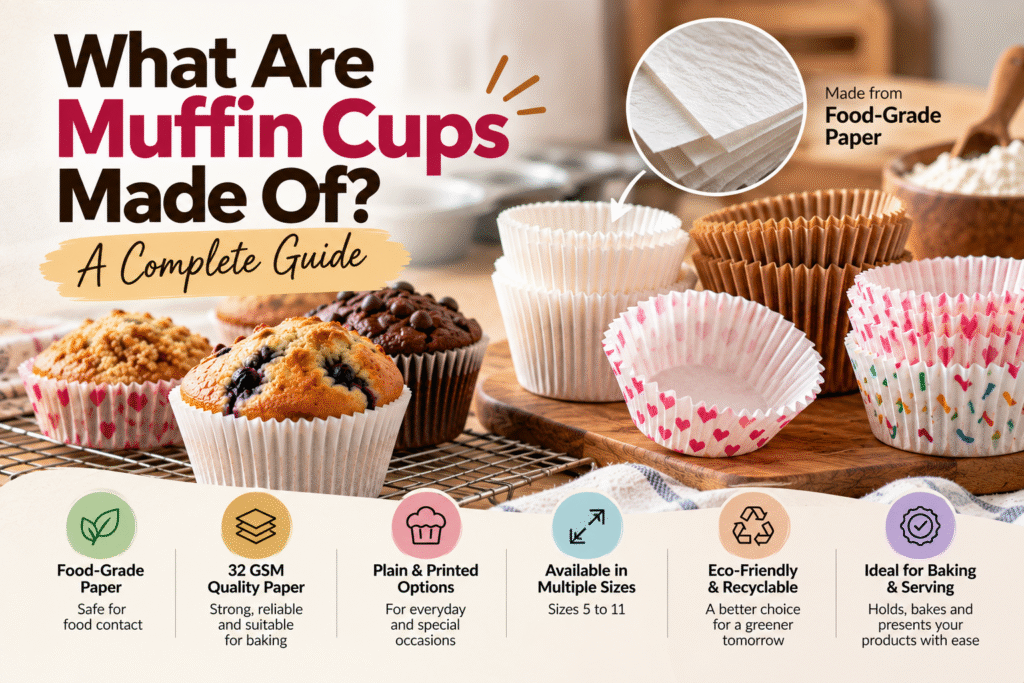
What Are Muffin Cups Made Of? A Complete Guide When you look at a muffin or cupcake, the paper cup around it might seem like a small detail. But that simple-looking cup has an important job. It holds the batter during baking, makes the finished product easier to handle, and adds to the overall presentation. For bakeries and food businesses, the material used to make muffin cups matters. The paper needs to be suitable for food applications while also offering the right combination of strength, convenience, and presentation. So, what are muffin cups actually made of? Let’s take a closer look. What Are Muffin Cups? Muffin cups, also commonly called cupcake liners, are paper cups used to hold individual baked products. They are commonly used for: The cup is placed inside a suitable baking tray, filled with batter, and baked along with the product. Once baked, the paper cup remains around the product, making it easier to handle and serve. Depending on the application, muffin cups can be plain or printed and are available in different sizes. What Material Are Muffin Cups Made From? Muffin cups are generally made from paper suitable for food-contact applications. At Sunshine Industrial Corporation, the muffin cups are made using 32 GSM Food Grade PUDUMJEE Packing Tissue Papers. The company manufactures plain and printed muffin cups in sizes ranging from 5 to 11. The choice of paper is important because the cup comes into direct contact with the baked product. Why Is Paper Quality Important? Not all paper products are designed for the same purpose. A muffin cup needs to perform its job while holding food during the baking and serving process. That’s why bakeries should pay attention to the material specification rather than choosing a product based only on appearance or price. Good-quality food-grade paper can contribute to: For commercial bakeries, consistency is particularly important because the same product may be used hundreds or thousands of times during regular production. What Does “Food Grade” Mean? The term food grade refers to materials intended for use in applications involving food. Since muffin cups come into direct contact with muffins, cupcakes, and other baked products, bakeries should choose products made from paper suitable for their intended food application. When purchasing muffin cups, it is reasonable to ask the supplier about: This information can help a bakery select a product that fits its production requirements. Are All Muffin Cups Made From the Same Paper? Not necessarily. Different manufacturers can use different types, specifications, and grades of paper depending on the product and intended application. This is one reason why comparing products only by appearance can be misleading. Two muffin cups may look similar but have different paper specifications. For a bakery, it is better to consider the complete product rather than simply choosing the cup that looks best or costs the least. What Is 32 GSM Paper? Sunshine Industrial Corporation uses 32 GSM Food Grade PUDUMJEE Packing Tissue Papers for its muffin cups. GSM stands for grams per square metre. It is a measurement used to describe the weight of paper. The 32 GSM specification is part of the paper specification used for Sunshine’s muffin cups. For a bakery purchasing in bulk, understanding specifications like GSM can be useful when comparing products and communicating requirements with suppliers. Plain and Printed Muffin Cups The paper material isn’t the only thing that can vary. Muffin cups are also available in different styles. Plain Muffin Cups Plain muffin cups have a simple appearance and can be used for everyday bakery production. They are suitable for businesses that prefer a clean and straightforward presentation. Common applications include: Printed Muffin Cups Printed muffin cups feature colours, patterns, or decorative designs. They can be useful when presentation is particularly important, such as: The choice between plain and printed cups is usually based on the product, occasion, and presentation requirements. Are Muffin Cups Eco-Friendly? Paper muffin cups can be an option for businesses looking for recyclable and eco-friendly packaging solutions. Sunshine Industrial Corporation describes its muffin cups as eco-friendly and recyclable. However, it is important for businesses to look at the specific material and disposal requirements of any packaging product rather than assuming that every paper product has identical environmental characteristics. If sustainability is an important part of your bakery’s packaging strategy, ask your supplier for clear information about the product’s material and recyclability. Do Muffin Cups Contain Plastic? This depends on the specific product and its construction. Because different muffin cups can be manufactured differently, businesses should check the manufacturer’s product specifications rather than making assumptions based solely on the appearance of the cup. For bakeries looking specifically for paper-based food packaging, discussing the material specification with the supplier is the safest way to understand what you’re purchasing. Do Muffin Cups Need to Be Greased? One of the practical advantages of using muffin cups is that they can simplify the baking process and reduce the need to grease individual sections of a muffin tray. However, whether additional greasing is necessary can depend on the recipe, product, and specific muffin cup. If you’re using a new type of cup, it’s a good idea to test it with your recipe before moving to large-scale production. Why Muffin Cup Size Matters Material isn’t the only factor to consider. The size of the cup also needs to match your product and baking tray. Sunshine Industrial Corporation offers muffin cups in sizes 5 through 11. Different sizes can be useful for different products and portion requirements. When choosing a size, consider: Testing the cup with your actual recipe is one of the easiest ways to determine whether a particular size works for your bakery. How Are Muffin Cups Used in Bakeries? Muffin cups are useful because they combine several functions into one simple product. They can help with: Baking:The cup holds the batter in an individual portion. Handling:The baked product can be picked up using the paper cup. Serving:Customers can eat or handle the product without directly

What Are Muffin Cups Made Of? A Complete Guide Read More »

A Complete Guide to Choosing the Right Muffin Cup Size

muffin cup

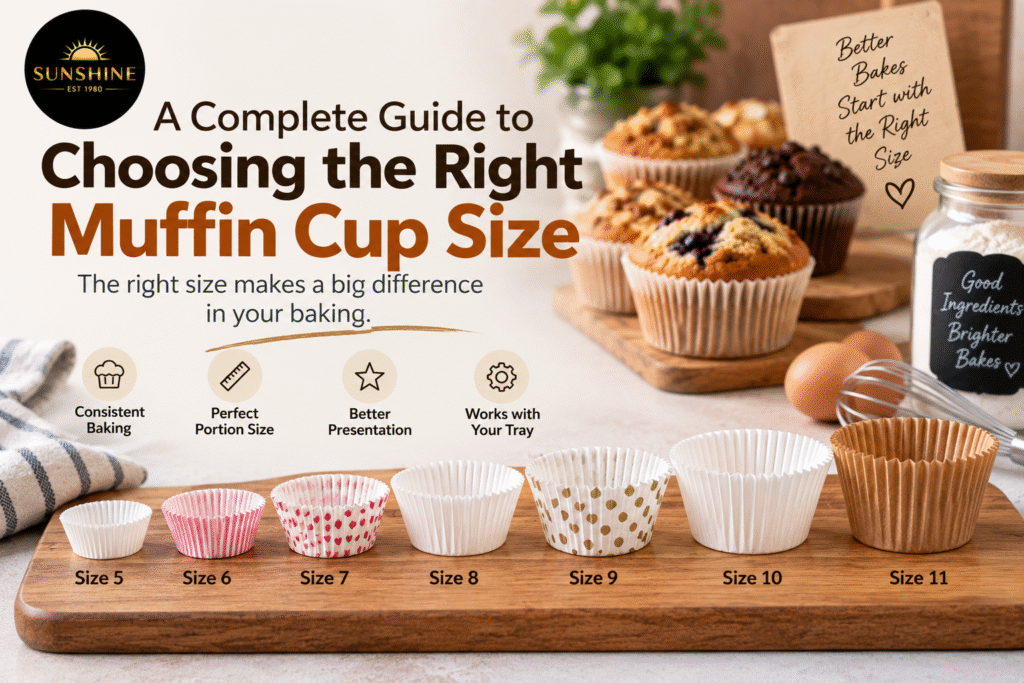
A Complete Guide to Choosing the Right Muffin Cup Size Choosing the right muffin cup size may seem like a small decision, but for a bakery, café, or commercial baking business, it can have a noticeable impact on the final product. The size of the muffin cup affects how much batter you can use, how the baked product looks, how it fits in your baking tray, and how consistently your products come out from one batch to another. Whether you make muffins, cupcakes, small cakes, or other individual baked products, selecting the right cup size can make your baking process more organised and your presentation more consistent. Sunshine Industrial Corporation offers muffin cups in sizes ranging from 5 to 11, giving bakeries several options for different baking requirements. Why Muffin Cup Size Matters Imagine preparing a large batch of cupcakes and discovering that the cups are too small for the amount of batter you normally use. The batter may rise beyond the edges, making the products difficult to handle and affecting their appearance. On the other hand, if the cups are too large, the same amount of batter may look undersized inside the liner. For a bakery producing products every day, these small inconsistencies can become noticeable. The right muffin cup size helps you work toward: Understanding Muffin Cup Sizes Muffin cup sizes can vary depending on the manufacturer and product specifications. This is why you should not select a cup based only on a number printed on a catalogue. Sunshine Industrial Corporation offers sizes 5 through 11. Rather than assuming that a particular size will automatically suit your recipe, consider how the cup performs with your actual batter, baking tray, and finished product. If you are introducing a new product, testing different sizes before placing a large order can help you identify the most suitable option. 1. Start With Your Product The first question to ask is simple: What are you baking? A standard muffin may require a different cup from a small cupcake or another individual baked product. Think about the final size and appearance you want. For example, if your bakery sells a consistent range of cupcakes, the cup should complement the portion size you have established for that product. Your goal should be to make the cup and the product look like they belong together. 2. Consider How Much Batter You Use The amount of batter placed in each cup is another important factor. If you normally use a particular quantity of batter for each muffin, test how that quantity behaves in different cup sizes. Look at: Testing is particularly useful because different recipes can behave differently during baking. A chocolate muffin, for example, may not rise in exactly the same way as another recipe. 3. Check Your Baking Tray Your muffin cup needs to work with your baking equipment. Before ordering in bulk, check that the selected cup fits properly into the cavities of your muffin tray. The cup should sit comfortably without being excessively compressed or loosely positioned. For commercial bakeries, it is worth testing the cup with the exact trays and equipment used during normal production. This can prevent unnecessary problems after a large order has already been placed. 4. Think About the Final Presentation Size isn’t only about baking performance. It is also about appearance. Customers expect products from a professional bakery to look consistent. If you sell ten cupcakes together, customers should ideally see ten products with a similar portion and presentation. A suitable muffin cup can help create a more uniform appearance across the display counter, takeaway box, or catering order. This becomes especially important when your bakery sells premium or customised products. 5. Consider Your Portion Sizes Muffin cups can also help a bakery maintain consistent portions. Once you establish a particular cup size and determine the appropriate amount of batter for it, your baking team can follow the same process for future batches. This can make production easier to standardise. For commercial bakeries, consistent portioning can also help with inventory planning because you have a clearer idea of how much batter and how many muffin cups are needed for a particular number of products. 6. Don’t Choose a Size Based Only on Price When buying muffin cups in bulk, it can be tempting to focus entirely on the price. But the cheapest cup isn’t necessarily the most suitable one for your bakery. Consider the complete value: A cup that doesn’t work properly can lead to unnecessary waste and production problems. 7. Plain or Printed Cups: Does Size Matter? Both plain and printed muffin cups can be available in different sizes. The choice between them usually depends on presentation rather than the basic sizing principle. Plain muffin cups can be suitable for: Printed muffin cups can be useful for: Whichever style you choose, make sure the size suits the actual product. 8. Think About Your Customers Your customers can also influence the size you choose. A bakery specialising in individual cupcakes may have different requirements from a business supplying large quantities of baked products to cafés or commercial buyers. Ask yourself: Your answers can help you decide which muffin cup size fits your business model. 9. Test Before Placing a Bulk Order This is one of the most useful steps for any bakery. If you’re unsure about a particular size, don’t immediately place a large order. Instead, test the cup with your normal: Check the product after baking. Does it look right? Does the cup hold the product comfortably? Is the portion size what you expected? Once you’re satisfied with the results, you can move toward regular or bulk purchasing with greater confidence. 10. Plan Your Stock Based on Production Once you know which sizes work for your products, consider how many cups you actually use. Sunshine Industrial Corporation’s product information specifies 500 pieces per roll and a minimum order quantity of 500 rolls for its muffin cup range. For a business ordering at this scale, production planning

A Complete Guide to Choosing the Right Muffin Cup Size Read More »

How Eco-Friendly Muffin Cups Can Improve Your Bakery Packaging

muffin cups

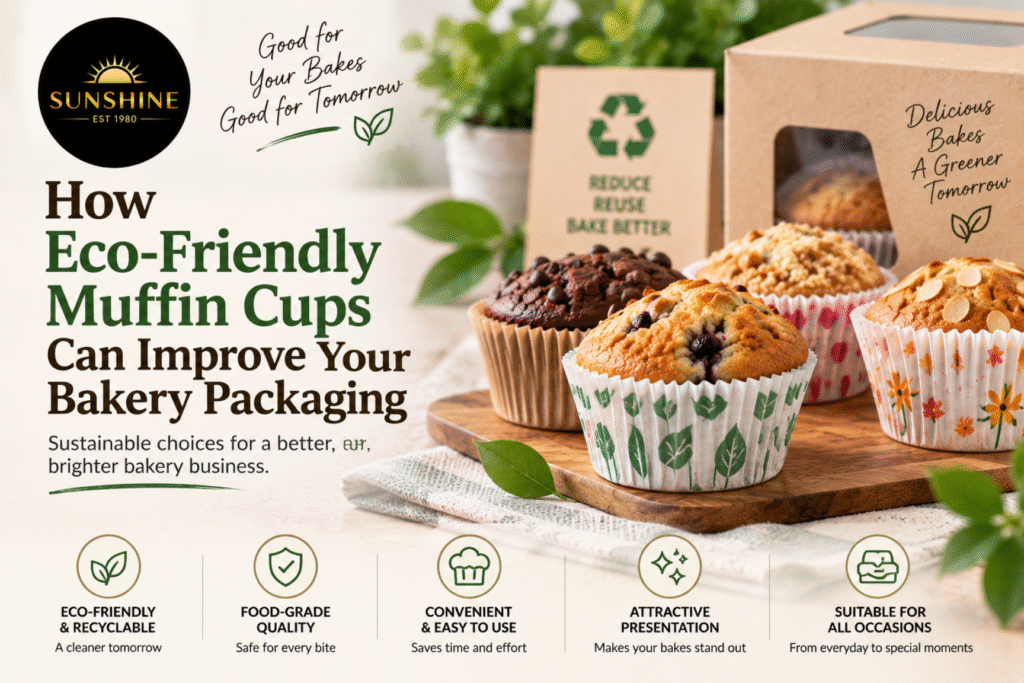
How Eco-Friendly Muffin Cups Can Improve Your Bakery Packaging When customers buy a muffin or cupcake, they notice more than just the taste. The way the product is presented, packed, and served can also influence their overall experience. For bakeries, cafés, home-baking businesses, and commercial food manufacturers, packaging has become an important part of the product. While boxes, labels, and bags often get most of the attention, muffin cups are also a part of that packaging experience. Choosing eco-friendly muffin cups can help a bakery create a cleaner presentation while supporting more sustainable packaging practices. But what exactly makes eco-friendly muffin cups useful, and how can they improve your bakery packaging? Let’s take a practical look. What Are Eco-Friendly Muffin Cups? Eco-friendly muffin cups are paper-based liners designed with environmental considerations in mind. They can be used for muffins, cupcakes, small cakes, and other suitable bakery products. For a bakery, the idea isn’t simply to replace one product with another. It’s about considering the materials used throughout the packaging process and finding options that balance food suitability, convenience, presentation, and environmental considerations. Sunshine Industrial Corporation manufactures muffin cups with a focus on eco-friendly and recyclable options. 1. They Can Reduce Dependence on Unnecessary Packaging A muffin cup already provides a layer around an individual baked product. Instead of relying on additional individual wrapping simply to make each muffin easier to handle, a suitable paper liner can provide both a practical and presentational function. For busy bakeries, this can help keep the packaging process straightforward. The cup can remain with the product from baking through serving or placement inside a bakery box. 2. They Give Your Products a Clean Presentation Sustainable packaging doesn’t have to look plain or unattractive. A well-made paper muffin cup can give cupcakes and muffins a neat, finished appearance. Plain muffin cups can create a simple and professional look, while printed muffin cups can add colour and personality. This is particularly useful for bakeries that want their packaging to complement the appearance of their products. 3. They Can Support Your Bakery’s Sustainability Goals Many businesses are becoming more conscious of the materials they use. Customers may also ask questions about packaging and whether a business is taking steps to reduce unnecessary environmental impact. Using recyclable or eco-friendly paper muffin cups can be one small part of a bakery’s broader sustainability approach. It isn’t a complete sustainability strategy on its own, but small packaging decisions can contribute when they are part of a larger effort. 4. Paper Muffin Cups Are Convenient for Everyday Baking One reason paper muffin cups are so widely used is convenience. They can be placed directly into suitable muffin trays and filled with batter. Once the products are baked, the liners stay with them, making handling and serving easier. For a bakery producing products throughout the day, convenience matters. The easier a packaging component is to use consistently, the easier it becomes to incorporate it into everyday production. 5. They Make Individual Products Easier to Handle Imagine a customer picking up a freshly baked cupcake. Handling the cupcake directly can affect the appearance of the product. A muffin cup provides a practical surface around the baked product, making it easier to pick up and serve. This is useful for: The cup becomes part of the customer experience rather than simply being a baking accessory. 6. Printed Eco-Friendly Muffin Cups Can Add Visual Appeal Sustainable packaging doesn’t mean that every product needs to look identical. Printed muffin cups can introduce patterns and colours while maintaining the convenience of a paper liner. For example, a bakery might use: Plain cups for everyday muffins and regular production. Printed cups for birthdays, celebrations, premium cupcakes, and special orders. This allows the business to choose its packaging according to the occasion. 7. Different Sizes Give Bakeries More Flexibility Every bakery has its own products. A business making small cupcakes may need a different cup size from one producing larger muffins. Sunshine Industrial Corporation offers muffin cups in sizes ranging from 5 to 11, giving businesses multiple options for different baking requirements. Choosing the appropriate size can help maintain consistent presentation across your products. Before ordering large quantities, it’s a good idea to test the cup with your recipe and baking tray. 8. Food-Grade Quality Still Comes First Eco-friendly packaging should never mean ignoring food-contact requirements. Muffin cups come into direct contact with food, so bakeries should pay attention to the material and its intended application. Sunshine Industrial Corporation uses 32 GSM Food Grade PUDUMJEE Packing Tissue Papers for its muffin cups. When choosing a supplier, ask about: Sustainability and food suitability should be considered together. 9. Eco-Friendly Packaging Can Strengthen Your Brand Story Today’s bakery customers don’t only buy food. They also connect with brands. A bakery that pays attention to its packaging can communicate something about how it operates. If sustainability is genuinely part of your business approach, choosing appropriate eco-friendly packaging can support that message. For example, a bakery could combine recyclable paper muffin cups with other thoughtful packaging choices such as appropriately sized boxes, minimal unnecessary wrapping, and responsible material selection. The important point is to make sure your environmental claims accurately reflect the materials and practices you actually use. 10. They Work for Both Small and Large Bakeries Eco-friendly muffin cups aren’t limited to one type of bakery. A home baker selling cupcakes locally may use them for small orders, while a commercial bakery can incorporate them into high-volume production. They can be used across different settings, including: The important thing is to select the right product, size, quantity, and style for your operation. How to Choose Eco-Friendly Muffin Cups for Your Bakery If you’re considering switching to eco-friendly muffin cups, don’t make the decision based solely on the word “eco-friendly.” Look at the complete product. Check the Material Ask what type of paper is used and whether it is suitable for your intended food application. Understand Recyclability Ask the supplier about the product’s

How Eco-Friendly Muffin Cups Can Improve Your Bakery Packaging Read More »

7 Benefits of Using Paper Muffin Cups for Baking

Paper Muffin Cups

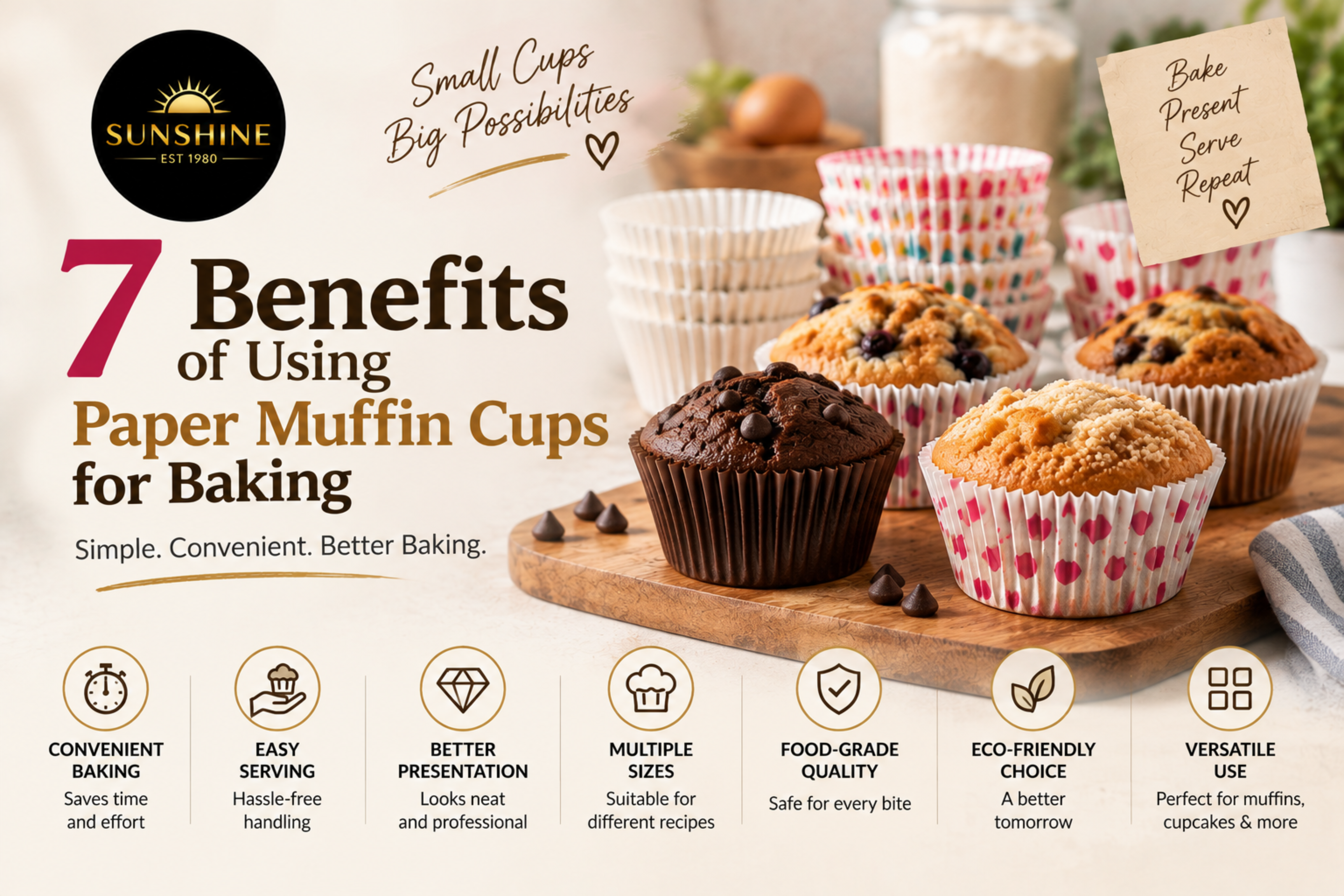
7 Benefits of Using Paper Muffin Cups for Baking When you’re baking muffins or cupcakes, the recipe usually gets most of the attention. You think about the ingredients, the oven temperature, the baking time, and, of course, how the finished product will taste. But there’s another small detail that can make baking much easier: the muffin cupDiscover 7 benefits of using paper muffin cups for baking, from easier handling and presentation to food-grade quality, versatility, and eco-friendly options.. Paper muffin cups are widely used by home bakers, cafés, bakeries, and commercial food businesses because they make both baking and serving more convenient. They can also give your products a neat, consistent appearance without adding unnecessary complexity to the baking process. If you’re wondering whether paper muffin cups are worth using, here are seven practical benefits to consider. 1. They Make Baking More Convenient One of the biggest advantages of paper muffin cups is simple convenience. Instead of pouring batter directly into a muffin tray, you can place a paper cup into each cavity and fill it with your prepared mixture. This makes the baking process more organised and can reduce the need to grease each individual section of the tray. For busy bakeries, where dozens or hundreds of muffins may be prepared at once, small time-saving steps can make a noticeable difference. 2. They Make Serving Easier Once your muffins or cupcakes are baked, the paper cup stays with the product. This makes the finished item easier to pick up, carry, and serve. Think about a bakery counter where customers are selecting individual cupcakes. A paper liner gives them a convenient way to handle the product without touching the baked portion directly. They’re also useful for: The result is a more convenient experience from the oven to the customer. 3. They Help Create a Clean and Consistent Presentation People eat with their eyes first. A well-baked muffin can look even more appealing when it is presented neatly in a suitable muffin cup. Plain paper cups provide a simple, professional appearance, while printed muffin cups can add colour and personality. For bakeries, consistency is particularly important. Using the same type and size of muffin cup across a product range can help create a more uniform presentation. 4. They Are Available in Different Sizes Not every muffin or cupcake is the same size. A small cupcake, standard muffin, and larger baked product may require different cup sizes. Choosing the appropriate size can help you maintain consistent portions and presentation. Sunshine Industrial Corporation offers muffin cups in sizes ranging from 5 to 11, giving bakeries flexibility when selecting cups for different products. Before ordering, it’s worth testing the cup with your actual baking tray and recipe to make sure the size works well for your production process. 5. Paper Muffin Cups Can Be a Practical Choice for Food Businesses Muffin cups come into contact with food, so material quality is an important consideration. For commercial bakeries, choosing suitable food-grade paper is part of maintaining a reliable food-production process. Sunshine Industrial Corporation manufactures muffin cups using 32 GSM Food Grade PUDUMJEE Packing Tissue Papers. When buying paper muffin cups, don’t simply compare prices. Ask the supplier about the paper specification, intended food application, quality standards, and consistency of supply. 6. They Can Support Eco-Friendly Packaging Choices Sustainability has become an important consideration for many businesses. Bakeries are increasingly looking at how they can reduce unnecessary packaging and choose materials that better fit their environmental goals. Paper muffin cups can be a practical option for businesses looking for recyclable and eco-friendly solutions. Sunshine Industrial Corporation focuses on eco-friendly and recyclable muffin cups, giving bakeries an option to consider sustainability alongside convenience and presentation. Of course, businesses should always check the specific material and disposal requirements of the products they purchase. 7. They Work Well for Both Everyday and Special Products One of the best things about paper muffin cups is their versatility. You don’t have to use them only for traditional muffins. They can be used for: You can also choose between plain and printed varieties depending on the product. For everyday bakery production, plain muffin cups can provide a clean and simple appearance. For birthdays, weddings, celebrations, or premium products, printed muffin cups can add a more decorative touch. This flexibility makes paper muffin cups useful for businesses serving different types of customers. Paper Muffin Cups for Bakeries: What Should You Look For? If you’re planning to purchase muffin cups for your bakery, there are a few things worth checking before placing a bulk order. Paper Quality Make sure the paper is suitable for its intended food-contact application. Size Choose a size that works with your baking tray, batter quantity, and finished product. Quantity Estimate your regular consumption so you can maintain sufficient stock without unnecessary over-ordering. Plain or Printed Choose plain cups for simple everyday presentation or printed cups when appearance is a bigger part of the product experience. Supplier Reliability Consistent quality and dependable supply are important when muffin cups are a regular part of your production process. Why Choose Sunshine Industrial Corporation? Sunshine Industrial Corporation has been manufacturing muffin cups since 1980 from its facility in Bykampady Industrial Estate, Mangalore. The company offers plain and printed muffin cups in multiple sizes and focuses on food-grade, eco-friendly, and recyclable options for the baking and confectionery industry. For bakeries that require regular or bulk supplies, having access to different sizes and styles can make it easier to choose products based on specific production needs. Final Thoughts Paper muffin cups may be a small part of the baking process, but they offer several practical advantages. They can make baking more convenient, simplify serving, improve presentation, support portion consistency, and provide flexibility for different bakery products. For businesses that are also considering sustainability, recyclable and eco-friendly paper options can be worth exploring. The key is to choose muffin cups based on quality, size, intended use, production volume, and presentation requirements rather than simply choosing

7 Benefits of Using Paper Muffin Cups for Baking Read More »

Why Food-Grade Muffin Cups Are Important for Bakeries

Food-Grade Muffin Cups

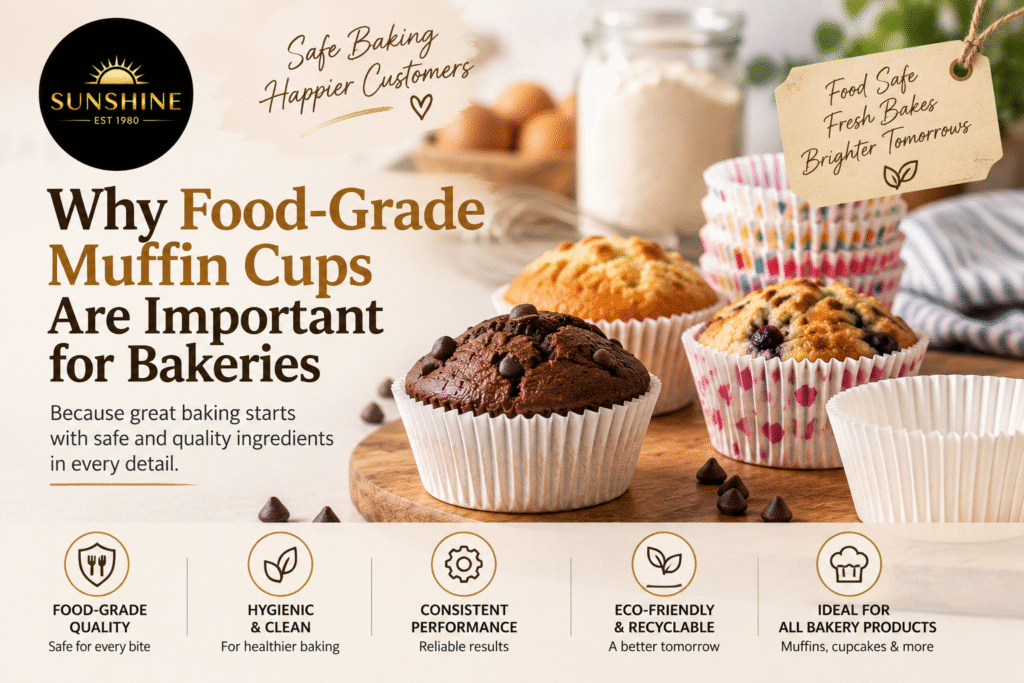
Why Food-Grade Muffin Cups Are Important for Bakeries When you run a bakery, you probably spend a lot of time thinking about ingredients, recipes, ovens, and presentation. But there is another small detail that deserves just as much attention—the muffin cup. Muffin cups come into direct contact with baked products, which means the material used to make them matters. For bakeries producing muffins, cupcakes, small cakes, or other food products, choosing suitable food-grade muffin cups is an important part of maintaining good hygiene and product quality. A muffin cup may look simple, but the right one can make baking, handling, serving, and presentation much easier. What Are Food-Grade Muffin Cups? Food-grade muffin cups are paper cups made from materials intended for food-contact applications. They are designed to hold products such as muffins and cupcakes while they are baked or served. Since the paper comes into contact with the food, bakeries need to pay attention to the quality and suitability of the material. For a commercial bakery, this isn’t something to choose based only on appearance or price. The paper, manufacturing quality, and intended application all deserve consideration. Why Does Food-Grade Quality Matter? Imagine producing hundreds or thousands of cupcakes every day. Every muffin cup you use becomes part of your production process. Using suitable food-grade materials can help a bakery maintain a more reliable and hygienic baking process. Here are some of the main reasons food-grade muffin cups are important. 1. Direct Contact With Food Muffin cups sit directly around the baked product. Because of this, the material should be appropriate for contact with food. A bakery should always ask its supplier about the type and quality of paper used rather than assuming that every paper liner is suitable for food applications. Food-grade materials are particularly important for businesses that produce food commercially and need consistent standards across their operations. 2. Supports Hygienic Baking Bakeries handle food at every stage, from mixing ingredients to baking and packaging. A suitable muffin cup provides a clean and convenient way to handle individual baked products. It can also make serving easier while reducing the amount of direct handling required after baking. For busy bakery kitchens, these small conveniences can make a difference during daily production. 3. Helps With Easy Handling A good muffin cup isn’t only about food safety. It also needs to perform well during everyday bakery operations. Muffin cups can make individual products easier to remove, handle, display, and serve. This is especially useful when a bakery is producing large quantities. Instead of handling each muffin directly, the cup provides a convenient layer between the product and the customer’s hands. 4. Makes Baking More Convenient Muffin cups can simplify the baking process by providing individual portions within a baking tray. They can help reduce the need for greasing the individual sections of a muffin tray and make transferring finished products easier. For commercial bakeries, anything that makes repetitive production more efficient can be valuable. 5. Consistent Product Presentation Customers notice presentation. Even when the recipe remains exactly the same, the way a muffin or cupcake is presented can influence how the product looks on the display counter. Food-grade paper muffin cups can provide a neat and consistent appearance across batches. Plain cups offer a clean and simple presentation, while printed muffin cups can add colour and visual appeal. What Material Does Sunshine Industrial Corporation Use? Sunshine Industrial Corporation uses 32 GSM Food Grade PUDUMJEE Packing Tissue Papers for its muffin cups. The company manufactures both plain and printed muffin cups and offers sizes ranging from 5 to 11. This gives bakeries the flexibility to choose different cup sizes depending on their products and production requirements. Food-Grade Doesn’t Mean You Should Ignore Other Factors While food-grade quality is essential, it shouldn’t be the only factor you consider. When choosing muffin cups for your bakery, also look at: The best muffin cup is one that fits your complete production process. Food-Grade Muffin Cups and Eco-Friendly Baking Sustainability is becoming increasingly important in the food industry. Many bakeries are looking for ways to make their operations more environmentally responsible without making everyday processes complicated. Paper muffin cups can be a practical option for businesses looking for recyclable and eco-friendly alternatives. Sunshine Industrial Corporation focuses on eco-friendly and recyclable muffin cups, making them suitable for bakeries that want to consider sustainability alongside food-grade quality. However, businesses should always check the specific material and disposal requirements of the products they purchase. How to Choose Food-Grade Muffin Cups for Your Bakery If you’re purchasing muffin cups for the first time—or considering switching suppliers—keep these points in mind. Check the Paper Specification Ask the supplier what type of paper is being used and whether it is intended for food-contact applications. Choose the Correct Size A muffin cup should suit the size of your product and baking tray. Sunshine offers sizes from 5 to 11, giving bakeries several options. Consider Your Production Volume A small bakery and a large commercial bakery have very different requirements. Think about your weekly or monthly consumption before deciding how much to order. Test Before a Large Order If you’re trying a new product, testing a smaller quantity first can help you evaluate its performance with your recipes and baking process. Choose a Reliable Supplier Consistent quality and dependable supply are important when muffin cups are an everyday part of your production. A supplier who understands bakery requirements can make repeat purchasing much easier. Plain or Printed: Does Food-Grade Quality Change? Not necessarily. Both plain and printed muffin cups need to be suitable for their intended food application. The main difference is their appearance and how they are used. Plain muffin cups are ideal for: Printed muffin cups can be useful for: So, don’t choose between plain and printed cups based only on appearance. Material quality should remain a priority with either option. Why Bakeries Should Think Beyond the Price It can be tempting to choose the cheapest muffin cup available, particularly when

Why Food-Grade Muffin Cups Are Important for Bakeries Read More »

Plain vs Printed Muffin Cups: Which Is Better for Your Business?

Plain vs Printed Muffin Cups

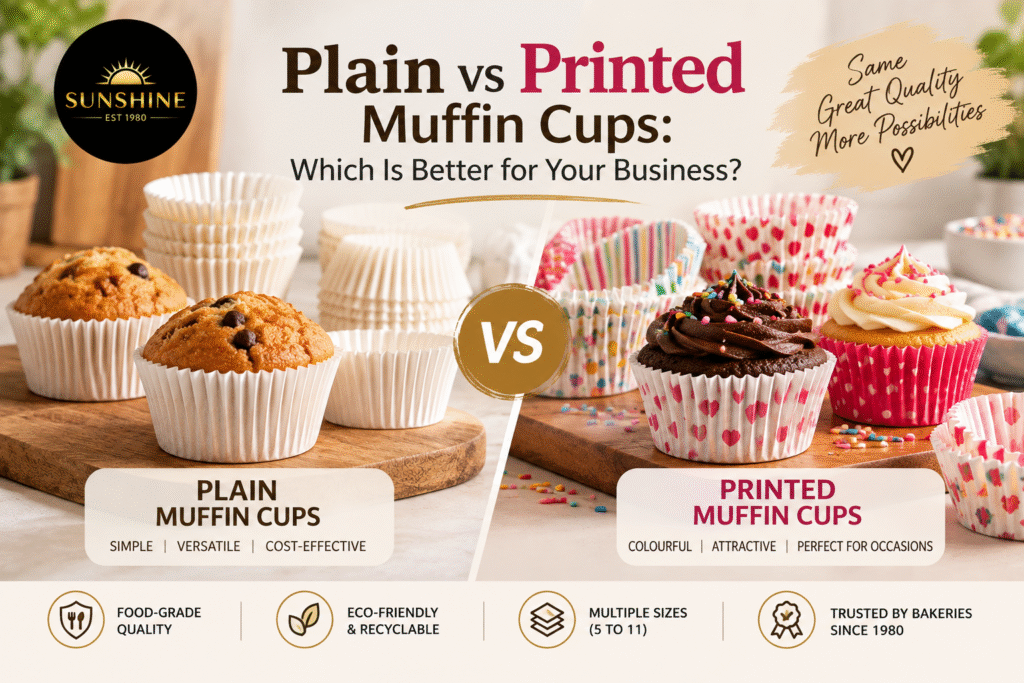
Plain vs Printed Muffin Cups: Which Is Better for Your Business? When you run a bakery, café, or commercial baking business, even the smallest packaging decision can make a difference. Muffin cups are a good example. They may look like a simple part of the baking process, but the right choice can influence presentation, cost, customer experience, and everyday production. One question bakery owners often ask is: Should I choose plain muffin cups or printed muffin cups? There is no single answer for every business. Plain muffin cups are practical, simple, and well suited to regular production. Printed muffin cups, on the other hand, can add colour and personality to your products. The better option depends on what you bake, how you sell it, and what your customers expect. Let’s compare both options so you can make a practical decision for your business. What Are Plain Muffin Cups? Plain muffin cups are simple paper liners without decorative printing. They offer a clean and professional appearance while keeping the focus on the muffin, cupcake, or other baked product. For bakeries producing large quantities every day, plain muffin cups can be a convenient choice. They work well for routine production because their appearance is simple and versatile. They can be used for: If your bakery focuses on consistent production rather than decorative presentation, plain muffin cups can be an excellent option. What Are Printed Muffin Cups? Printed muffin cups are paper liners featuring colours, patterns, or decorative designs. They are designed to make baked products look more attractive when they are displayed or served. A simple cupcake can have a completely different appearance when placed inside a colourful printed liner. Therefore, printed cups can be especially useful when presentation plays an important role in your sales. They are suitable for: For businesses that want their baked products to stand out, printed muffin cups can provide an easy way to add visual appeal. Plain vs Printed Muffin Cups: A Quick Comparison Feature Plain Muffin Cups Printed Muffin Cups Appearance Simple and clean Colourful and decorative Best for Regular production Special and presentation-focused products Branding potential Limited Greater visual impact Everyday use Excellent Excellent Events Suitable Particularly attractive Bakery displays Simple More eye-catching Product presentation Professional Decorative and vibrant Flexibility Very versatile Best when design complements the product Both options have their place. The important thing is to match the muffin cup with your business needs. 1. Consider Your Bakery’s Customers Before choosing between plain and printed muffin cups, think about your customers. If most of your customers purchase everyday muffins, cupcakes, or bakery products for regular consumption, plain cups may be perfectly suitable. However, if your bakery handles birthday parties, weddings, celebrations, corporate events, or customised orders, printed cups may offer a more attractive presentation. For example, a colourful cupcake served at a child’s birthday party can benefit from a decorative liner. Meanwhile, a standard breakfast muffin sold at a café may look perfectly professional in a plain cup. Your customer’s expectations should guide your choice. 2. Think About Product Presentation Presentation matters in the food industry. Customers often notice the appearance of a product before tasting it. A well-presented cupcake can feel more special, even when the recipe itself remains unchanged. Printed muffin cups can add: Plain muffin cups take a different approach. They provide a neat background that allows the actual baked product to remain the centre of attention. Therefore, ask yourself: Do you want the muffin cup to stand out, or should the baked product stand out? Your answer can make the decision much easier. 3. Consider Your Production Volume Production volume is another important consideration. Commercial bakeries may produce thousands of muffins or cupcakes regularly. In this situation, consistency and supply reliability are extremely important. Plain muffin cups can work particularly well for high-volume everyday production because they offer a straightforward presentation. Printed cups can also be used for large-scale production, especially when a particular design is part of your product presentation or brand strategy. Before ordering, consider how many cups you use each week or month. This will help you plan your inventory and choose the right supplier and order quantity. 4. Don’t Ignore Size Whether you choose plain or printed cups, size matters. Using the wrong size can affect the appearance of your baked products and how well the cup fits your baking process. Sunshine Industrial Corporation offers muffin cups in sizes ranging from 5 to 11, giving bakeries options for different baking requirements. When selecting a size, consider: If you’re introducing a new muffin or cupcake to your menu, testing the cup size before placing a large order is a sensible approach. 5. Think About Food-Grade Quality Looks are important, but quality should come first. Muffin cups come into contact with food, so bakery businesses should pay close attention to the materials used. Sunshine Industrial Corporation uses 32 GSM Food Grade PUDUMJEE Packing Tissue Papers for its muffin cups. The company focuses on food-grade and eco-friendly products for baking and serving applications. Whether you choose plain or printed cups, don’t compromise on the quality of the paper simply to save money. 6. Which Option Is More Suitable for Everyday Baking? For everyday bakery production, plain muffin cups can be a practical choice. Imagine a bakery producing muffins every morning for local customers. The main priorities may be: In such a situation, plain muffin cups can meet the requirements without adding unnecessary visual elements. However, there is no reason a bakery cannot keep both options in stock. You might use plain cups for everyday products and printed cups for premium or seasonal products. 7. When Are Printed Muffin Cups a Better Choice? Printed muffin cups become particularly useful when presentation is part of the buying decision. Suppose you are selling cupcakes for a birthday celebration. Customers may want something that looks attractive straight out of the box. A printed muffin cup can add an extra decorative touch without requiring complicated packaging. Similarly, cafés and boutique bakeries

Plain vs Printed Muffin Cups: Which Is Better for Your Business? Read More »

How to Choose the Best Muffin Cups for Your Bakery

Best Muffin Cups

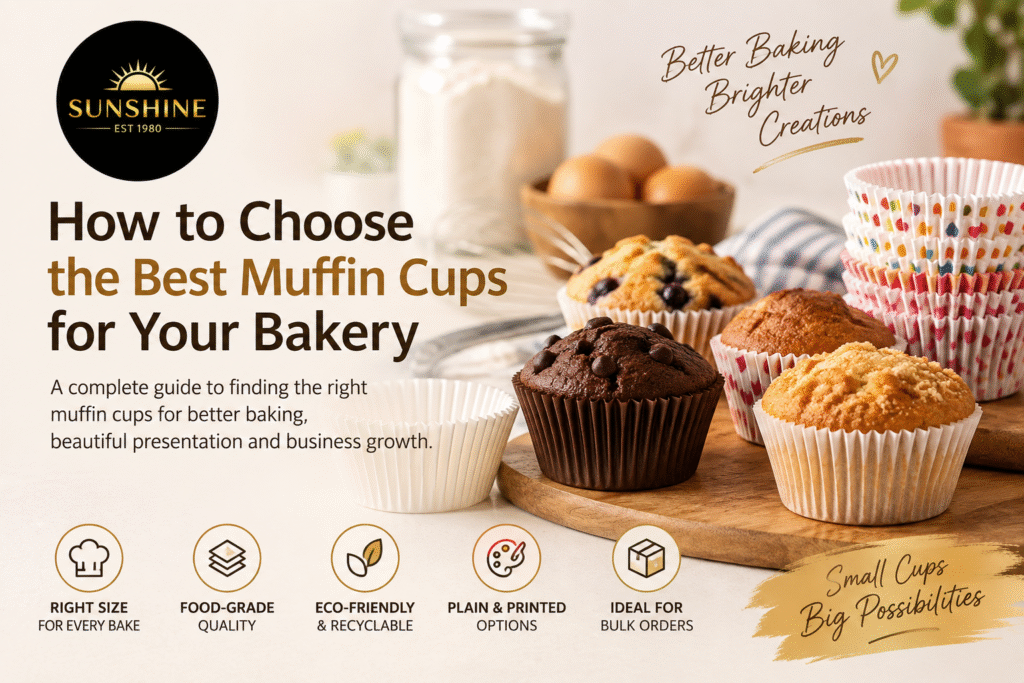
How to Choose the Best Muffin Cups for Your Bakery Running a bakery is about much more than creating delicious recipes. From selecting quality ingredients to choosing the right packaging, every small decision can affect the final product. One of the simplest yet most important items in a bakery is the muffin cup. Whether you make muffins, cupcakes, small cakes, cookies, or certain Indian sweets, the right muffin cup can make baking easier and presentation more attractive. But with different sizes, styles, materials, and designs available, how do you choose the best muffin cups for your bakery? The answer depends on your products, production volume, presentation requirements, and the type of customers you serve. Why Muffin Cups Matter in a Bakery Muffin cups, also commonly called cupcake liners, are used to hold individual baked products during baking and serving. They can help reduce the need for greasing baking trays while also making finished products easier to handle. For commercial bakeries, consistency is particularly important. Using the right muffin cup size and quality can help create a uniform appearance across batches. A good muffin cup should fit your baking requirements while offering convenient handling and an appealing presentation. 1. Choose the Right Muffin Cup Size One of the first things to consider is size. Different bakery products require different cup sizes. A small cupcake, standard muffin, and larger baked product will not necessarily work well with the same liner. Sunshine Industrial Corporation offers muffin cups in sizes ranging from 5 to 11, giving bakeries flexibility when selecting cups for different products. Before placing a bulk order, consider: Choosing the correct size can help your products maintain a consistent shape and professional appearance. 2. Consider the Paper Quality The material used to manufacture muffin cups is another important factor. For food businesses, the paper should be suitable for food contact and appropriate for the intended baking application. Good-quality paper can provide the structure needed to hold the batter during baking and make the finished product easier to handle. Sunshine Industrial Corporation uses 32 GSM Food Grade PUDUMJEE Packing Tissue Papers for its muffin cups. When comparing suppliers, ask about the type and quality of paper used rather than choosing purely based on price. 3. Think About Your Bakery’s Product Range Not every bakery sells the same products. A neighbourhood bakery may focus on everyday muffins and cupcakes, while a larger commercial bakery may produce several varieties of baked goods for different customers. Your muffin cup selection should match your product range. For example, plain cups may be suitable for everyday production where the focus is on the baked product itself. Printed cups can be useful when presentation is an important part of the product. If your bakery produces multiple types of products, having different sizes and styles available can give you greater flexibility. 4. Plain or Printed Muffin Cups? This is one of the most common decisions bakery owners need to make. Plain Muffin Cups Plain muffin cups offer a simple and clean appearance. They are suitable for bakeries that want the product itself to remain the main focus. They can work particularly well for: Printed Muffin Cups Printed muffin cups add colour and visual appeal to baked products. They can be especially useful when presentation matters, such as birthdays, celebrations, events, bakeries, cafés, and gift orders. A visually attractive liner can make an ordinary cupcake look more appealing without requiring complicated packaging. The choice between plain and printed cups ultimately depends on your product, customer expectations, and branding style. 5. Look for Food-Grade Options Food safety should always be a priority for bakeries. Muffin cups come into direct contact with food, so bakery owners should choose products made from suitable food-grade materials. When evaluating a supplier, ask questions such as: A supplier who can clearly explain their material and quality standards is generally a better choice for long-term business relationships. 6. Consider Eco-Friendly and Recyclable Options Sustainability is becoming increasingly important for businesses and consumers. Many bakeries are looking for ways to reduce unnecessary packaging waste and make more environmentally responsible choices. Paper muffin cups can offer a convenient alternative for bakeries looking for recyclable options. Sunshine Industrial Corporation focuses on eco-friendly and recyclable muffin cups as part of its product offering. If sustainability is important to your bakery, ask suppliers about the paper source, recyclability, and manufacturing practices before making your decision. 7. Check the Supplier’s Production Capacity Price isn’t the only factor to consider when buying muffin cups in bulk. A bakery needs a supplier who can consistently provide the required quantity without compromising quality. Before choosing a supplier, consider: For commercial bakeries, a reliable supplier can be much more valuable than a supplier offering the lowest initial price. 8. Calculate Your Actual Cost When comparing muffin cups, don’t look only at the price per roll or package. Think about the cost in relation to your actual production. For example, consider: Cost per cup = Total purchase cost ÷ Number of usable cups This gives you a better idea of the actual cost of using a particular product. You should also consider whether poor-quality cups could result in damaged products, inconsistent presentation, or unnecessary wastage. A slightly higher purchase price may be worthwhile if the product provides better consistency and reliability. 9. Buy According to Your Production Volume A home baker ordering a few dozen cups has very different requirements from a commercial bakery producing thousands of products every week. If you have regular high-volume production, bulk purchasing can make inventory management easier. Sunshine Industrial Corporation supplies muffin cups in bulk, with its standard product information specifying a minimum order quantity of 500 rolls. Each roll contains 20 cups, with 25 pieces per cup, resulting in 500 pieces per roll. Before ordering, calculate your average weekly or monthly consumption. This can help you avoid both overstocking and running out of supplies during busy periods. 10. Choose a Supplier You Can Trust Your muffin cup supplier becomes part of

How to Choose the Best Muffin Cups for Your Bakery Read More »

Muffin Cups Manufacturers in Mangalore for Bakeries

Muffin Cups Manufacturers

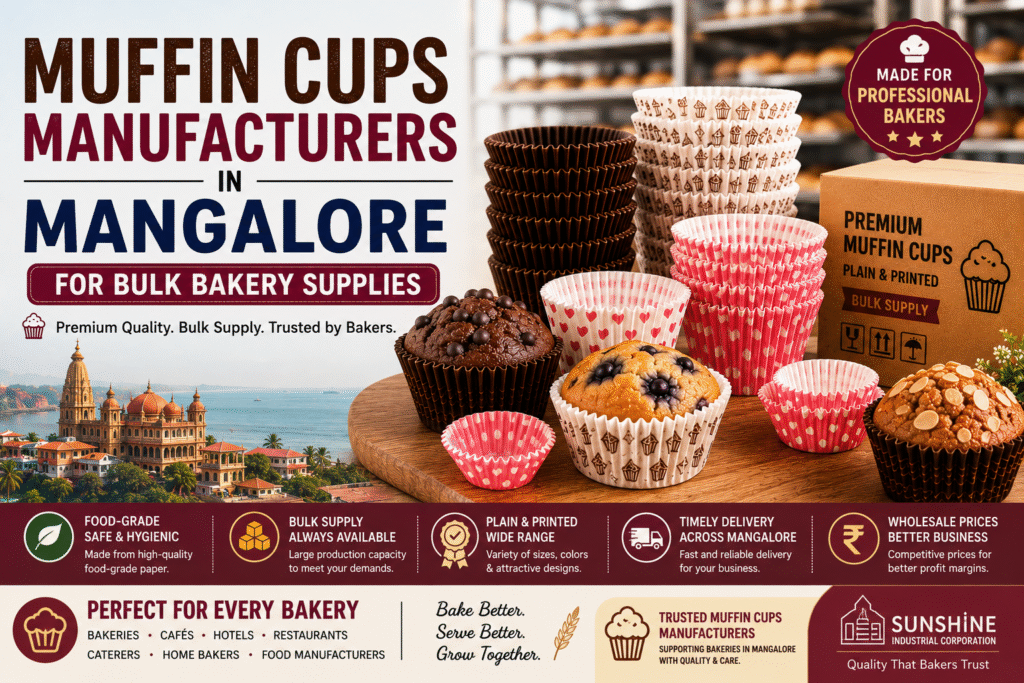
Muffin Cups Manufacturers in Mangalore for Bakeries When you run a bakery, the focus is usually on recipes, ingredients, ovens, and presentation. But there is another small item that plays an important role in everyday production — the humble muffin cup. Whether you are making muffins, cupcakes, small cakes, or certain confectionery products, having the right muffin cups can make baking and serving much easier. For bakeries ordering in large quantities, finding a dependable muffin cups manufacturer in Mangalore can also make a difference in quality, supply, and overall purchasing convenience. Mangalore has a strong industrial and commercial base, making it a practical location for businesses looking for bakery packaging products. But how do you choose the right manufacturer for your bakery? Let’s take a closer look. Why Muffin Cups Are Important for Bakeries Muffin cups are not simply containers for batter. They help shape the baked product and make it easier to handle, serve, and package. For a busy bakery, good muffin cups can help with: When hundreds or thousands of muffins are produced every day, even a small packaging issue can slow down the entire process. Why Consider Muffin Cups Manufacturers in Mangalore? For bakeries located in Mangalore and surrounding areas, sourcing from a local or regional manufacturer can make communication and procurement easier. Instead of depending entirely on distant suppliers, bakeries can discuss their requirements directly with manufacturers and understand product specifications, order quantities, customization options, and delivery schedules. Mangalore-based manufacturers can also be a convenient option for businesses across Karnataka and other parts of South India, depending on their distribution and logistics capabilities. What Should You Look for in a Muffin Cups Manufacturer? Not every manufacturer will offer the same level of quality or flexibility. Before placing a bulk order, consider a few important factors. 1. Food-Grade Materials Muffin cups come into direct contact with food, so the material used should be appropriate for bakery applications. Ask the manufacturer about the type and specification of paper used. A professional manufacturer should be able to explain the material and provide relevant information about its food-contact suitability. For example, Sunshine Industrial Corporation states that it manufactures muffin cups using food-grade PUDUMJEE packing tissue paper. 2. Consistent Quality Consistency matters when you are running a commercial bakery. If muffin cups vary significantly in size, shape, or strength from one batch to another, it can affect your production process and the appearance of your finished products. A reliable manufacturer should have quality-control processes in place to maintain consistent products across orders. 3. Different Sizes Bakeries don’t all make the same products. You may need different muffin cups for mini cupcakes, standard muffins, larger muffins, or other bakery and confectionery applications. A manufacturer offering multiple sizes gives your business greater flexibility. Sunshine Industrial Corporation, for instance, lists muffin cups in sizes from 5 to 11. 4. Plain and Printed Options Plain muffin cups are a practical choice for everyday baking. They are simple, versatile, and suitable for businesses that already use branded outer packaging. Printed muffin cups, on the other hand, can add a little more personality to your products. They can be useful for: If branding is important to your bakery, ask whether the manufacturer provides custom or printed options. Bulk Ordering for Commercial Bakeries A bakery that produces large quantities needs a steady supply of muffin cups. Before ordering, calculate your approximate monthly requirement. Don’t just look at your current production. Consider seasonal demand, special orders, festivals, and future business growth. When discussing a bulk order, ask the manufacturer about: This makes it easier to compare manufacturers on more than just the quoted price. Don’t Choose Based on Price Alone Price is important, especially when purchasing packaging in bulk. But the cheapest option isn’t necessarily the most economical. Suppose a low-cost muffin cup tears easily, loses its shape, or gives inconsistent results. Your bakery could end up dealing with product wastage and production delays. Instead, consider the overall value. A slightly higher-priced product may be worthwhile if it provides better consistency, dependable supply, and suitable quality for your baking process. Test Samples Before Placing a Large Order One of the best ways to evaluate a manufacturer is to test samples. Use the sample muffin cups with your regular recipes and baking equipment. Pay attention to: Testing first can save you from committing to a large quantity of a product that doesn’t suit your bakery. Consider Your Storage Requirements Bulk orders can save time and simplify procurement, but they also require adequate storage. Muffin cups should be stored in a clean, dry environment and protected from moisture, dust, crushing, and other conditions that could affect their quality. When ordering large quantities, ask the manufacturer how the products are packaged for transportation and storage. Plain Muffin Cups vs Printed Muffin Cups The choice between plain and printed cups depends largely on your bakery’s needs. Plain muffin cups are ideal for everyday production where simplicity and cost efficiency are priorities. Printed muffin cups are useful when you want your baked products to have a more distinctive appearance or support your brand identity. You don’t necessarily have to choose one option for everything. Some bakeries may use plain cups for regular products and printed cups for premium or seasonal ranges. Why Direct Communication With a Manufacturer Helps When you work directly with a manufacturer, you can discuss your requirements instead of relying entirely on a middleman. This can be especially useful when you need: Good communication also makes it easier to address issues if your requirements change as your bakery grows. Choosing a Mangalore Manufacturer for Long-Term Supply A good muffin cup manufacturer should be more than a one-time supplier. If your bakery is growing, your packaging requirements will probably grow with it. You may move from a few hundred cups to several thousand or more each month. That’s why it is worth considering whether the manufacturer can support your business over the long term. Look at their manufacturing experience, product range,

Muffin Cups Manufacturers in Mangalore for Bakeries Read More »

Muffin Cups for Commercial Baking: Choosing the Right Manufacturer

Best Muffin Cups Manufacturer in India

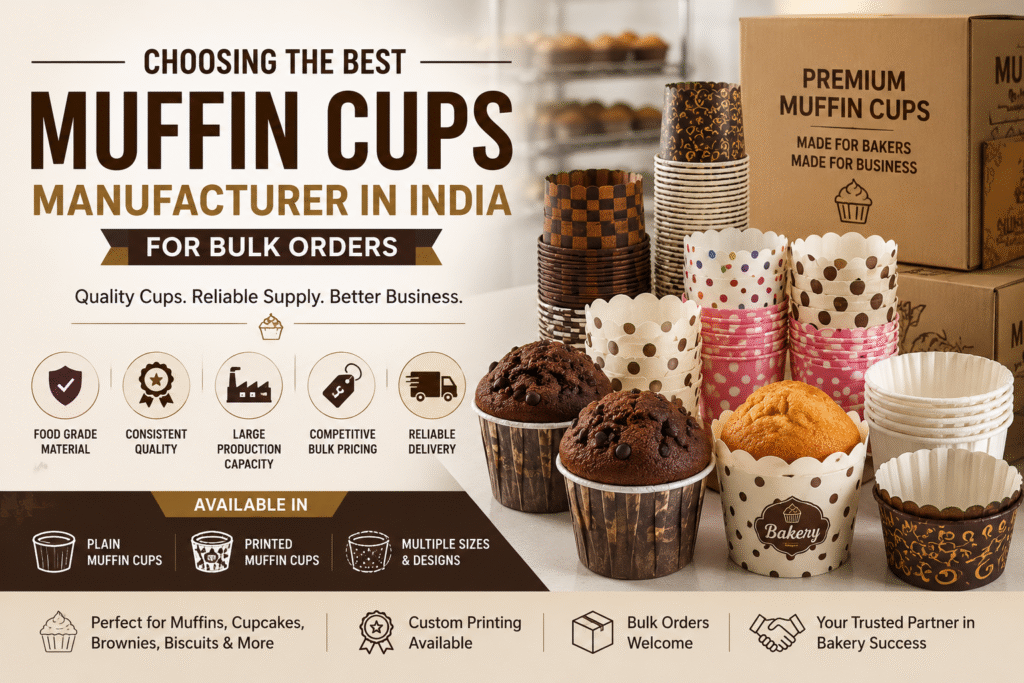
Muffin Cups for Commercial Baking: Choosing the Right Manufactures For a commercial bakery, every small detail can affect the final product. Ingredients, mixing, baking temperature, packaging, and even the muffin cup all play a role in how the finished muffin or cupcake looks and performs. When you are producing hundreds or thousands of muffins every day, choosing the right muffin cups manufacturer becomes more important than it may seem. The right manufacturer can help you maintain consistent quality, manage costs, and avoid problems such as poorly shaped cups, sticking, tearing, or inconsistent sizing. But with so many suppliers and manufacturers available, how do you know which one is right for your business? Let’s look at the key factors commercial bakers should consider. Why Muffin Cups Matter in Commercial Baking Muffin cups do more than simply hold the batter while it bakes. They help maintain the shape of the product and make handling, presentation, and serving easier. For commercial bakeries, muffin cups should ideally provide: A small inconsistency in the cup can become a bigger problem when you are baking thousands of products every week. Start With Your Production Requirements Before choosing a manufacturer, understand exactly what your bakery needs. Consider the type of products you produce and the volume you handle. A small café producing a few hundred muffins a week will have different requirements from a large bakery supplying supermarkets and restaurants. Think about: Having these details ready makes it easier to discuss your requirements with potential manufacturers. Choose a Manufacturer That Offers Consistent Quality Consistency is one of the most important factors in commercial baking. Imagine ordering muffin cups from two different batches and finding that one batch is slightly smaller or weaker than the other. That difference may affect how the batter sits in the cup or how the finished product looks. A reliable muffin cups manufacturer should have proper production and quality-control processes to maintain consistency from one order to the next. Ask about the material used, manufacturing process, quality checks, and how the manufacturer handles batch-to-batch consistency. Check the Material and Food-Grade Quality Since muffin cups come into direct contact with food, the material should be suitable for bakery applications. Commercial bakers should ask manufacturers about: Do not choose a manufacturer based only on price. A cheaper product may not provide the consistency or performance required for commercial production. Consider Different Muffin Cup Sizes Not every bakery produces the same type of muffin or cupcake. You may need different sizes for: A manufacturer offering multiple sizes can make purchasing easier as your product range grows. Before placing a bulk order, confirm the exact dimensions and specifications rather than relying only on general terms such as “standard size.” Plain vs. Printed Muffin Cups Branding is becoming increasingly important for bakeries. Printed muffin cups can add a distinctive look to your products and help reinforce your brand. A bakery logo, brand name, or suitable design can make a simple muffin look more professional and recognizable. However, printing isn’t necessary for every business. Plain muffin cups may be a practical choice if: If you want printed cups, ask the manufacturer about minimum order quantities, printing options, design requirements, and lead times. Look at Bulk Order Flexibility Commercial baking usually involves recurring orders rather than one-time purchases. A good manufacturer should be able to understand your expected volume and provide a practical ordering arrangement. Before committing, ask: A manufacturer who can grow with your bakery can be more valuable than one offering the lowest initial price. Don’t Compare Manufacturers on Price Alone Price naturally matters when buying muffin cups in bulk, but it should not be the only deciding factor. The actual value of a bulk order depends on several things, including: For example, a slightly cheaper muffin cup may not be a good deal if you experience higher wastage or inconsistent baking results. Instead of asking only, “What is the price per piece?”, consider the overall cost and value of the product. Ask About Packaging and Storage Even good-quality muffin cups can become difficult to use if they are poorly packed or stored. Commercial bakeries often purchase large quantities that may remain in storage for weeks or months. Proper packaging helps protect the cups from moisture, dust, crushing, and other issues during transportation and storage. Ask your manufacturer how the cups are packed for bulk orders and what storage conditions they recommend. Check Manufacturing Capacity Your manufacturer should be able to meet your production requirements consistently. If your bakery receives a large seasonal order, for example, you may suddenly need significantly more muffin cups than usual. Before choosing a supplier, understand their manufacturing capacity and typical lead times. This can help prevent shortages during busy periods such as festivals, holidays, wedding seasons, or promotional campaigns. Location Can Affect Delivery For large-volume bakery businesses, logistics can have a significant effect on overall purchasing costs. Choosing a manufacturer located closer to your business or major transportation routes may make deliveries easier and potentially reduce transportation costs. For businesses sourcing bakery packaging in South India, working with established manufacturers in manufacturing hubs such as Mangalore or Karnataka can be worth considering. However, location should still be evaluated alongside quality, capacity, pricing, and delivery reliability. Why Buying Directly From a Manufacturer Can Help Commercial bakeries often have ongoing packaging requirements. Buying directly from a manufacturer can offer advantages such as clearer communication, better understanding of specifications, and easier repeat ordering. You can communicate directly about: It also makes it easier to build a long-term business relationship instead of searching for a new supplier every time you need stock. Ask for Samples Before a Large Order One of the simplest ways to evaluate a manufacturer is to request samples before placing a large order. Test the muffin cups with your own recipes and baking process. Check: A sample test can reveal practical issues that may not be obvious from a product description. Consider Long-Term Reliability A commercial bakery needs more than a

Muffin Cups for Commercial Baking: Choosing the Right Manufacturer Read More »