Bulk Muffin Cups: What Bakery Businesses Should Know Before Ordering
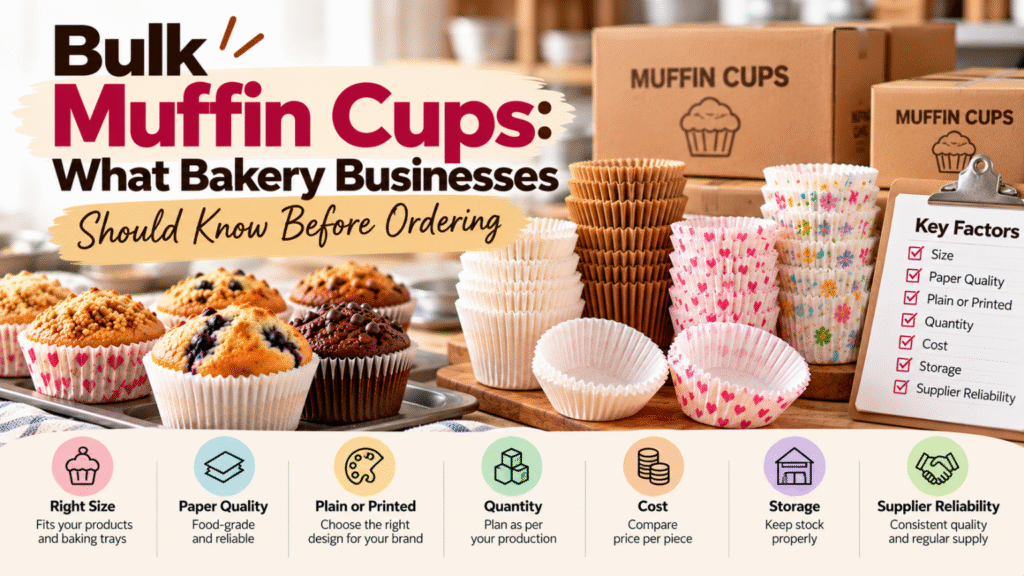
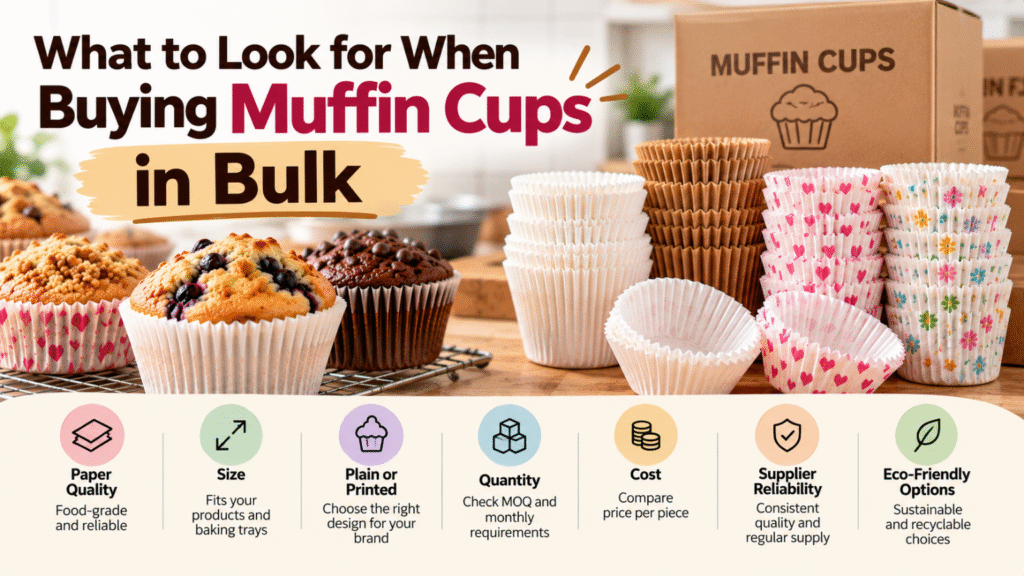
Bulk Muffin Cups: What Bakery Businesses Should Know Before Ordering For a bakery, muffin cups may seem like a small part of the overall operation. But when you are producing hundreds or thousands of muffins and cupcakes every month, they become an important part of your regular supply chain. Buying bulk muffin cups can make ordering more convenient and help you maintain a steady stock. However, placing a large order without checking the size, paper quality, quantity, and supplier can create unnecessary problems. The right approach is to understand your bakery’s requirements first and then choose a supplier that can consistently meet them. Why Do Bakeries Buy Muffin Cups in Bulk? A bakery that produces muffins or cupcakes regularly needs a dependable supply of liners. Instead of placing small orders repeatedly, bulk purchasing can help businesses plan their stock around their production schedule. For example, a bakery may use muffin cups for: When muffin cups are used every day, running out of stock can interrupt production. Keeping an appropriate quantity available can make the purchasing process easier to manage. 1. Know How Many Muffin Cups You Actually Need Before placing a bulk order, calculate your normal consumption. Start with your average daily production. For example, if your bakery uses 500 muffin cups per day and operates six days a week, you may use around 3,000 cups per week. However, don’t stop at your regular production. Consider periods when demand increases, such as: Understanding your average and peak requirements will help you decide how much stock to maintain. 2. Choose the Right Muffin Cup Size Buying a large quantity of the wrong size can be a costly mistake. Muffin cups should match your products, batter quantity, and baking trays. A small cupcake may need a different cup from a larger muffin. Even if two cups appear similar, their dimensions may produce different results during baking. Sunshine Industrial Corporation offers muffin cups in sizes ranging from 5 to 11, giving bakery businesses options for different products and production requirements. Before placing a large order, test the cup with your actual: This simple step can save you from ordering a large quantity that doesn’t suit your bakery. 3. Check the Paper Quality When purchasing bulk muffin cups, don’t focus only on quantity and price. The paper used to make the cup is equally important. Muffin cups come into direct contact with food, so bakery businesses should check whether the material is suitable for the intended food application. Sunshine Industrial Corporation uses 32 GSM Food Grade PUDUMJEE Packing Tissue Papers for its muffin cups. When comparing suppliers, ask about: Knowing the material specification helps you make a more informed decision rather than choosing a product based only on appearance. 4. Decide Between Plain and Printed Muffin Cups Bulk ordering doesn’t necessarily mean choosing only one style. Depending on your bakery, you may need plain muffin cups, printed muffin cups, or both. Plain Muffin Cups Plain cups provide a simple and professional appearance. They can be suitable for: Printed Muffin Cups Printed cups can add colour and visual appeal to your products. They may be particularly useful for: If your bakery serves different types of customers, maintaining both styles can provide greater flexibility. 5. Understand the Minimum Order Quantity Every supplier may have different bulk-order requirements. According to Sunshine Industrial Corporation’s product information, its muffin cups have a minimum order quantity of 500 rolls, with 500 pieces per roll based on the stated product specifications. Before ordering, compare the supplier’s minimum quantity with your actual consumption. A large MOQ may work well for a commercial bakery with high production volume. But if your bakery uses fewer cups, you should consider storage capacity and how quickly you can use the stock. 6. Calculate Your Cost Per Cup Bulk pricing can sometimes make a product look cheaper simply because it is purchased in a larger quantity. Instead of comparing only the total price, calculate the approximate cost per cup. The basic formula is: Cost per cup = Total purchase cost ÷ Total number of cups This gives you a more useful number when comparing different suppliers. But remember that price isn’t the only consideration. A slightly cheaper product may not provide better value if it causes: Look at the overall value rather than the price alone. 7. Think About Storage Before Ordering Bulk buying means you need enough space to store the products properly. Muffin cups should be kept in a clean, dry environment and protected from moisture, dust, and unnecessary handling. Before ordering a large quantity, consider: The goal is to have enough stock without allowing the inventory to become unnecessarily large. 8. Test Before You Commit to a Large Order This is particularly important when you’re changing suppliers. A muffin cup may look perfectly suitable in a catalogue or photograph, but your bakery’s recipe and equipment are what ultimately matter. Test the product with your normal baking process. Check: Once the product passes your test, you can feel more confident about ordering in bulk. 9. Consider Your Bakery’s Presentation The muffin cup becomes part of the finished product. For everyday products, a plain cup may provide a clean and simple appearance. For special occasions, a printed cup can make the product more colourful and attractive. Think about how your muffins and cupcakes are sold. Are they displayed individually? Packed in boxes? Sold at a café counter? Delivered for events? Your answer can help determine whether plain, printed, or both types of muffin cups make sense for your business. 10. Ask About Food-Grade Suitability Food safety should remain a priority when purchasing bakery supplies. Because muffin cups come into contact with food, ask your supplier about the paper specification and intended application. Don’t assume that every paper liner is identical. A professional supplier should be able to explain what material is used and provide relevant product information. This is especially important when you’re purchasing thousands of pieces for commercial use. 11. Consider Eco-Friendly Options Sustainability
Bulk Muffin Cups: What Bakery Businesses Should Know Before Ordering Read More »